Used Car Buyer Geography Trends: The 161-Mile Radius Explained
Updated November 2026.
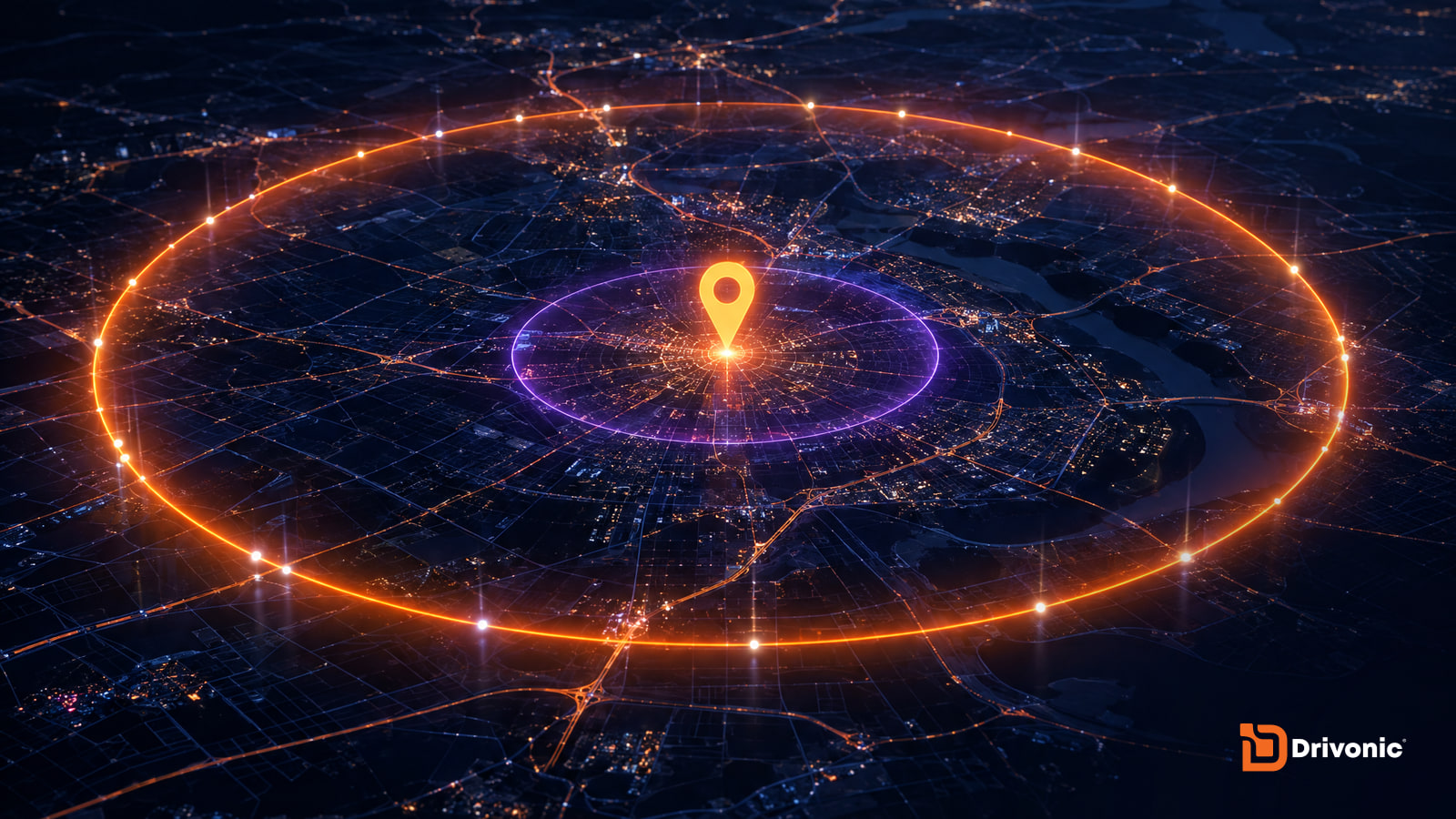
Used car buyer geography trends show a clear shift: the average shopper now travels 161 miles to buy a vehicle, up from about 20 miles in the 1990s. That change erases the protected trade area dealers once relied on. Every rooftop now competes with stores hundreds of miles away for the same shopper.
Key takeaways
- The average buyer now lives 161 miles from the dealership they buy from, up from about 20 miles in the 1990s, per Car Dealership Guy News.
- Cox Automotive forecasts about 2.6 million certified pre-owned (CPO) sales in 2027, with used retail up 2% and new up 1%, the first time in about seven years every segment points up, according to Cox Automotive data reported by Car Dealership Guy News.
- Cox Automotive's Jonathan Smoke expects at least 80% of shoppers to use AI somewhere in the car-buying process within 10 years.
- Bryan Calloway of the National Digital Titling Clearinghouse (NDTC) warns dealers are in a "change or die" period and risk becoming the Blockbuster of auto, with Carvana cast as Netflix.
- Tools like IRIS℠ and MobileLync℠ let dealers spot and act on in-market shoppers regardless of ZIP (postal) code, before a 161-mile shopper buys somewhere else.
Why do used car buyer geography trends show shoppers traveling 161 miles instead of 20?
Shoppers now travel farther because the internet removed the reason to stay local. In the 1990s, a shopper's information was limited to what was on the lot down the street. A 20-mile radius covered nearly every realistic option. Today a shopper can compare inventory, price and reviews across an entire region from a phone. That is why used car buyer geography trends have stretched from a short drive to a multi-county search over the last three decades.
Bryan Calloway of the National Digital Titling Clearinghouse (NDTC) shared the 161-mile figure at Used Car Week 2026. He framed it as proof that geography no longer protects a dealership's customer base the way it once did, according to Car Dealership Guy News. A shopper in one metro can now cross-shop a dealer three states away, compare delivery options and pick whoever has the right VIN at the right price. Inventory, trust and price now travel farther than most ad budgets ever reached.
Shoppers now research across sites like Cars.com, AutoTrader, Edmunds, Kelley Blue Book and J.D. Power ratings before ever contacting a dealer. Wholesale data from Manheim and valuation guides from the National Automobile Dealers Association (NADA) shape what those shoppers expect to pay. Direct-to-consumer sellers like Vroom have also trained shoppers to expect delivery across state lines, not just local pickup.
For dealers, that 161-mile shopper radius is not a one-time data point. It is a sign that the old PMA (primary marketing area) map most stores still use for planning is outdated. A dealer who only targets shoppers inside a 20 or 30-mile ring is ignoring most of the actual buying pool now.
What does Cox Automotive's 2027 sales forecast mean for used, new and CPO sales?
Cox Automotive's 2027 forecast points to modest, broad-based growth, the first time in about seven years every segment has moved in the same direction. Certified pre-owned is the standout, projected to hit roughly 2.6 million units, the fastest-growing segment in the forecast, according to Cox Automotive data reported by Car Dealership Guy News.
| Segment | 2027 Direction | Detail |
|---|---|---|
| Used retail | Up about 2% | First broad used growth in roughly seven years |
| New retail | Up about 1% | Modest but positive across the board |
| CPO | Fastest-growing segment | About 2.6 million units expected |
A 1 to 2 percent gain will not fill a showroom by itself. But three segments moving the same direction after years of mixed results gives dealers a cleaner signal for ordering inventory and setting 2027 ad budgets. For CPO specifically, that growth lines up with the same shift in used car buyer geography trends. A shopper willing to drive 161 miles is also a shopper willing to cross-shop CPO inventory outside their home market. Dealers sitting on certified units should see our CPO inventory retargeting strategy for how to put that growth to work.
How will AI change the way shoppers buy cars over the next decade?
AI is expected to become a standard part of car shopping within 10 years, not a niche tool. Cox Automotive's Jonathan Smoke expects at least 80% of shoppers to use AI somewhere in the purchase process in that window, according to Car Dealership Guy News.
That is a meaningful shift in AI car shopping trends between now and the mid-2030s. When a shopper asks an AI assistant to compare trims or summarize reviews, that shopper may never visit a single dealer's website or click a single ad. A dealer with accurate inventory and pricing data in that AI search gets found, no matter how far away the shopper lives. A dealer without clean data simply does not show up, and loses the sale before anyone picks up the phone.
Combined with the 161-mile radius, dealers are now competing on two fronts at once: wider geography and shoppers who let an AI tool handle part of the comparison shopping. A local SEO plan and a local ad budget will not fix either problem on their own.
How can dealers target in-market shoppers outside their old trade area?
Dealers can target in-market shoppers outside their old trade area by using identity-resolved data instead of radius targeting based on ZIP (postal) code. Conquest marketing beyond local market boundaries requires knowing who is actually shopping, not just who lives nearby.
- Resolve identity across the full funnel. IRIS℠ uses 304M+ consumer profiles and 175M+ VIN-verified records to identify in-market shoppers regardless of where they live. A store can see demand coming from 60, 100 or 200 miles out.
- Flag competitor visits fast. MobileLync℠ captures competitor shoppers using polygon-level targeting, often within 24-48 hours, so a dealer can reach a shopper who just walked another lot before that shopper signs paperwork elsewhere. We recommend checking these alerts daily, not monthly. A competitor visit loses most of its value within a day or two.
- Put verified audiences on video. ActivReach℠ runs VIN-verified connected TV (CTV) and over-the-top (OTT) campaigns with a minimum 5X ROI guarantee, useful for reaching shoppers who live outside a traditional radius-based media buy.
- Run acquisition and retention together. MarketBuilder℠ covers Facebook, Google Ads, YouTube, Bing, Verizon Media and Amazon from a single engine, starting around $5,500 a month with no annual contract.
A 161-mile average buying radius means the dealer down the street is no longer the only competitor, and the dealer three counties over is no longer out of reach. We built IRIS℠ to resolve identity across those distances using 304M+ consumer profiles and 175M+ VIN-verified records, regardless of ZIP code. MobileLync℠ then flags when those same shoppers visit a competitor's lot, often within 24-48 hours, so a dealer can act on distance-agnostic demand instead of assuming geography still protects them.
None of this requires abandoning local marketing. It requires adding a layer that finds demand wherever it actually lives. Used car buyer geography trends show that demand is no longer confined to a short drive from the lot.
What should dealers learn from the Blockbuster warning at Used Car Week?
The lesson is simple: a faster, easier buying process now beats a shorter drive. At Used Car Week 2026, Bryan Calloway of the NDTC delivered a direct change-or-die warning. He compared inaction to Blockbuster's collapse and cast Carvana as the Netflix that disrupted the category, according to Car Dealership Guy News.
Calloway described his son picking up a Carvana-purchased car from a vending machine within 15 minutes of arriving, with no step in the process ever repeated. That is the bar shoppers now compare every dealership experience against, whether or not it is a fair comparison.
Dealers do not need a vending machine to respond. They need a buying process that does not waste a shopper's time. They also need a marketing approach that reaches the shopper before a competitor does, since that shopper may already be comparing a dealer 161 miles away. Speed and follow-up matter more here, not less. Our piece on protecting gross during a slower sales process covers the operational side of this.
How will the aging boomer generation affect dealer sales after 2030?
Baby boomers, roughly 61 to 80 years old, are the wealthiest generation and buy vehicles more often than most other age groups right now. That volume will shrink around 2030, and dealers can see the drop-off coming years in advance.
When that volume falls off, it has to be replaced by younger buyers with different habits: more AI-assisted research, more cross-market comparison and, per the 161-mile trend, far less loyalty to geographic proximity. Dealers planning inventory mix, CPO strategy and marketing budgets for the next five years should build toward that buyer now, rather than after boomer volume drops.
What this means for your dealership
A 161-mile average buying radius means the dealer across town is no longer the only competitor, and the dealer three counties over is no longer out of reach either. Five steps dealers should take now:
- Stop planning media and inventory around a fixed-mile PMA. Use identity-resolved data from IRIS℠ to see where in-market demand for your inventory is actually coming from.
- Set up competitor visit alerts through MobileLync℠ so a shopper who visits another rooftop gets a timely offer from you instead, not a missed opportunity discovered after the deal closes.
- Build CPO into your 2027 plan now. With roughly 2.6 million units forecast industry-wide, certified inventory is where growth is concentrated.
- Audit your buying process for friction. If a shopper can get a car from a vending machine in 15 minutes, a multi-hour desk process is a real competitive disadvantage.
- Start planning for the generation behind boomers before 2030 arrives, not after volume has already dropped.
Get a clearer read on your own market with our free marketing intelligence report, which shows where your in-market shoppers are actually coming from.
Frequently asked questions
Why do shoppers now travel 161 miles instead of 20 to buy a vehicle?
Online research and inventory visibility removed the reason to shop only nearby. Shoppers can now compare price, trim and reviews across a wide region before ever visiting a lot, so the realistic shopping radius grew from about 20 miles in the 1990s to 161 miles today, per Car Dealership Guy News.
What does Cox Automotive's 2027 forecast mean for used, new and CPO sales?
It signals broad, if modest, growth. Used retail is projected up 2%, new up 1%, and CPO is the fastest-growing segment at roughly 2.6 million units, the first time in about seven years every segment points up at once, according to Cox Automotive data reported by Car Dealership Guy News.
How will AI change the way shoppers buy cars over the next decade?
Cox Automotive expects at least 80% of shoppers to use AI somewhere in the purchase process within 10 years. That means dealers need to be visible and accurate in AI-assisted research, not just on their own website.
How can dealers target in-market shoppers outside their old trade area?
By using identity-resolved audience data instead of ZIP code radius targeting. Platforms like IRIS℠ and MobileLync℠ identify and reach in-market shoppers and competitor visitors regardless of distance from the lot.
What should dealers learn from Carvana's process to avoid becoming the next Blockbuster?
Speed and follow-through matter more than location. Bryan Calloway's change-or-die warning points to convenience, not proximity, as the deciding factor for the next generation of buyers.
How will the aging boomer generation affect dealer sales volume after 2030?
Boomer buying volume, currently strong, is expected to fall off around 2030. Dealers need an inventory and marketing plan that already accounts for the younger, more digitally driven shoppers who will have to replace that volume.
See what IRIS℠ knows about your market: https://drivonic.com/iris.
Sources
- Used Car Week: Behind the 2027 sales forecast and a change-or-die dealer warning, Car Dealership Guy News
About the author
Automotive data and marketing analysts
Drivonic is a dealer-owned data and technology company with over 10 years of automotive data excellence. It turns fragmented automotive data into sales outcomes for dealerships, OEMs, Tier 2 associations and marketing agencies. The editorial team turns IRIS℠ audience data and industry reporting into practical guidance for dealership leaders.
More from DrivonicRelated articles

Auto Financing Rates Dealer Strategy: Winning Despite Rate Hikes
October 29, 2026

Dealer Inventory Days Supply by Brand: What the 82-Day Average Hides
October 27, 2026

Fixed Ops Growth Service Retention Strategy for Q4 2026
September 30, 2026
