Carvana's CDJR sales strategy ZIP codes: how it wins share nationwide
Updated: November 2026
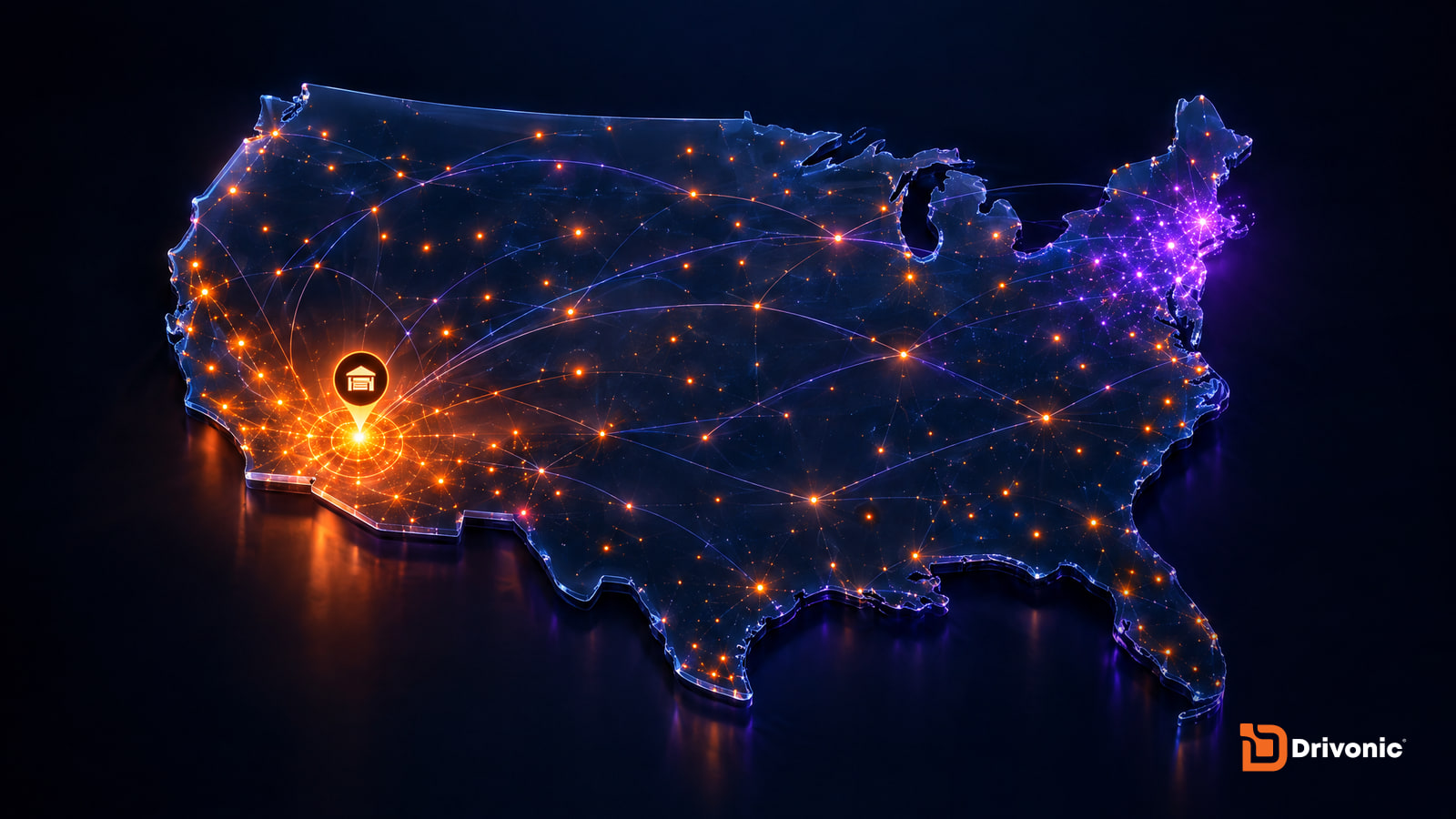
Carvana's CDJR sales strategy ZIP codes approach answers a simple question: how does a retailer with only seven physical stores end up ranked No. 2 in a state where it has no dealership at all? From May through August, Carvana's seven Chrysler, Dodge, Jeep, Ram (CDJR) stores registered 4,687 new vehicles across 3,269 ZIP codes (the US Postal Service's five-digit mail routing areas) in 42 states, according to Mobility Global data analyzed by researcher Chris Wood and reported by Car Dealership Guy News. Many of those wins came one or two cars at a time, far from any Carvana lot. In New Jersey, where Carvana has no store at all, that pattern was enough to rank it the No. 2 CDJR seller in the state.
Key takeaways: Carvana's CDJR sales strategy ZIP codes
- Carvana's seven CDJR stores sold into 3,269 ZIP codes across 42 states from May through August, per Mobility Global data reported by Car Dealership Guy News. In about 73% of those ZIP codes, it sold just one vehicle.
- The typical CDJR dealer keeps 86.1% of registrations inside its home market, according to the same analysis. That is why Carvana's national spread looks so unusual.
- Carvana has no store in New Jersey. Its Casa Grande, Arizona location alone made it the No. 2 CDJR seller in the state, with 4.1% share.
- Mark Dodge Chrysler Jeep Ram in Lake Charles, Louisiana reached buyers in 136 designated market areas, or DMAs (the regions Nielsen uses to group local media markets), in one quarter. That nearly matches Carvana's entire seven-store footprint of 141 DMAs.
- 96.3% of the 1,347 dealers Chris Wood benchmarked in the second quarter kept sales concentrated at home. The ZIP-level threat Carvana represents is still the exception, not the rule.
Carvana's CDJR sales strategy: winning ZIP codes without local stores
Carvana's CDJR sales strategy treats its seven Stellantis-franchised stores as one national inventory pool rather than seven separate local dealerships. From May through August, those seven stores registered 4,687 new vehicles across 3,269 ZIP codes in 42 states, according to data from Mobility Global analyzed by researcher Chris Wood and reported by Car Dealership Guy News. In about 73% of those ZIP codes, Carvana registered just one vehicle.
Carvana's CDJR sales strategy spreads one or two sales across thousands of ZIP codes, turning hundreds of small wins into real national share. It is not winning any single market outright. It uses its national Carvana.com storefront to reach a shopper anywhere, rather than waiting for one to walk onto a lot.
Compare that to AutoNation. AutoNation registered nearly as many new CDJR vehicles over the same period, 4,181, but concentrated them in far fewer ZIP codes, 1,330, per the same Mobility Global data. AutoNation is still playing a regional game. Carvana is playing a national one, powered by online discovery instead of physical showrooms.
What percentage of CDJR dealer sales typically stay inside the home market?
Most CDJR dealers keep the overwhelming majority of their sales close to home. In the second quarter, the typical CDJR dealer kept 86.1% of its registrations inside its home market, per Mobility Global data cited by researcher Chris Wood in the Car Dealership Guy News analysis. That number explains why Carvana's spread looks so unusual on paper.
Among the 1,347 dealers Chris Wood benchmarked in the second quarter, 96.3% kept most of their registrations in their home market. Only a handful of outliers, Carvana among them, built a sales pattern that crosses dozens of states. For a dealer who assumes the competitive set stops at the county line, that 96.3% figure feels reassuring. But a national seller with no local overhead can still pick off one or two deals a month in ZIP codes nobody is watching.
How does Carvana's Casa Grande, Arizona store end up selling vehicles registered in New Jersey?
Carvana's Casa Grande, Arizona store processes deals for buyers nowhere near Arizona. Every one of Carvana's seven store websites funnels purchases through Carvana.com. Where a sale gets registered is not necessarily where it happened, per Mobility Global's analysis.
Of the 340 new CDJR vehicles Carvana registered in New Jersey, a state where it has zero physical stores, 332 were attributed to that single Casa Grande location. That was enough to rank one Arizona dealership as the No. 2 CDJR seller to New Jersey buyers.
The spread inside New Jersey tells the real story. Carvana's 340 registrations landed in 221 of the state's 685 ZIP codes, or 32%, at about 1.5 vehicles per ZIP. No single ZIP code gave it a meaningful win. The volume came from showing up in hundreds of places at once.
| Rank | Seller | New Jersey Registrations | Market Share |
|---|---|---|---|
| 1 | Nielsen Dodge Chrysler Jeep Ram (in-state dealer) | ~407 | 4.9% |
| 2 | Carvana (no New Jersey store) | 340 | 4.1% |
Total New Jersey CDJR registrations for the period: 8,315, per Car Dealership Guy News. About 81% of shoppers still bought from an in-state dealer. But no single dealer dominates, which is exactly why a scattered newcomer with 4.1% share could land in second place.
What is ZIP code level conquest marketing, and should your dealership use it?
ZIP code level conquest marketing means targeting and measuring sales opportunity at the ZIP code instead of the county, city or DMA. Carvana's results show why the ZIP code is the right unit to track. One or two sales in a few hundred ZIP codes adds up to real share, even when no single market looks threatening on its own.
For a CDJR dealer, this is less about copying Carvana's national model. It is more about recognizing a new scale of threat. Mark Dodge Chrysler Jeep Ram in Lake Charles, Louisiana shows a domestic version of the same idea. Mark Boniol, the dealer principal, credits Dave Smith Motors in Idaho with pioneering national sales strategies before Carvana entered the CDJR business. Mark Dodge reached buyers in 136 DMAs in the second quarter, nearly matching all seven Carvana stores combined at 141 DMAs. It kept only 14.4% of sales at home. The typical CDJR dealer reaches buyers in just seven DMAs, per the same Mobility Global analysis.
Mark Dodge sold 4,013 new vehicles last year. About 45%, or 1,789 units, went to Louisiana buyers. Texas came next at 1,098 units. Mark Dodge built that reach on purpose, using a nearby state line to pull in Texas buyers 30 miles away. Carvana is doing something similar at a bigger scale, without the geographic logic of a nearby state line.
How can you tell if shoppers in your market are buying from an out-of-state competitor?
The honest answer for most dealers is that they cannot, not with the tools sitting in their customer relationship management (CRM) system or dealer management system (DMS) today. A dealer watching local competitors in their own DMA would never see 332 Casa Grande, Arizona sales landing quietly in New Jersey ZIP codes. Registration data surfaces months after the fact, long after the gross is gone.
IRIS℠ catches that activity before it shows up in next quarter's registration numbers. IRIS draws on 304M+ consumer profiles and 175M+ VIN-verified vehicle records covering 98% of US households. That means a dealer can see in-market shopping activity at the ZIP code level before a sale registers somewhere else, not after. See what IRIS℠ knows about your market.
Once a dealer can see where shoppers are active, MobileLync℠ turns that visibility into action. It flags competitor shoppers within 24-48 hours using polygon-level targeting, so a dealer can reach a shopper before an out-of-market seller gets there first. See how MobileLync℠ works.
Carvana's national model depends on digital discovery rather than lot traffic. ActivReach℠'s VIN-verified connected TV (CTV) audiences and cross-channel retargeting keep a local dealer visible to shoppers comparing options online, long before any sale gets registered anywhere.
What this means for your dealership
Carvana is not going to out-sell a well-run CDJR store in its home market. The real risk shows up in small numbers: one or two deals per ZIP code, repeated across hundreds of ZIP codes, until they add up to real share.
- Map your trade area by ZIP code, not by DMA. A DMA-level report will not flag a single ZIP code that loses one or two deals a quarter.
- Watch for out-of-state or out-of-market sellers appearing in your registration data, even in small numbers. One sale from an out-of-area dealer is worth checking, not ignoring.
- Use in-market shopper data to act before the sale, not after the registration posts. IRIS℠ can show which ZIP codes in your market have active shopping behavior today.
- Set up conquest alerts so your sales team can respond to a competitor shopper within days. MobileLync℠ flags that activity within 24-48 hours.
- Stay visible where shoppers actually compare vehicles now, including streaming video and connected TV. ActivReach℠ keeps VIN-verified audiences in front of your inventory with a minimum 5X ROI guarantee.
Request a free marketing intelligence report to see where your dealership's share is leaking before it shows up in next quarter's registration data.
Frequently asked questions
How is Carvana selling new CDJR vehicles outside its home markets without local stores?
Carvana's seven CDJR stores route every online purchase through Carvana.com. That means a deal can be registered in a state where Carvana has no physical lot. From May through August, that approach produced 4,687 new vehicle registrations across 3,269 ZIP codes in 42 states, per Car Dealership Guy News.
What percentage of CDJR dealer sales typically stay inside the home market?
The typical CDJR dealer kept 86.1% of its registrations inside its home market in the second quarter. Among the 1,347 dealers benchmarked, 96.3% kept most of their sales close to home, which is why Carvana's national spread stands out.
How can a dealer tell if shoppers in nearby ZIP codes are buying from an out-of-state competitor?
Registration data eventually shows it, but only after the sale is gone. In-market shopper data at the ZIP code level, the kind IRIS℠ provides, can show a dealer where shopping activity is happening in real time, before a competitor closes the deal.
What is ZIP code level conquest marketing and how does it work?
It means identifying and targeting in-market shoppers by ZIP code rather than by city or DMA, then acting on that signal quickly. Carvana's one-or-two-sale wins in thousands of ZIP codes show how much share can accumulate this way, even without local dominance.
Should my CDJR dealership try to expand sales beyond its home DMA like Carvana or Mark Dodge?
Not every dealer has the inventory depth or logistics to run a national model like Carvana or Mark Dodge Chrysler Jeep Ram, which reached 136 DMAs in a single quarter. Most dealers are better served defending their home ZIP codes more tightly while watching for outside sellers chipping away at share.
How does Carvana's Casa Grande, Arizona store end up selling vehicles registered in New Jersey?
Carvana's seven store websites all funnel buyers through the same national Carvana.com checkout. A sale can register to whichever store processed it, regardless of where the buyer lives. That is how 332 of Carvana's 340 New Jersey registrations were attributed to its Casa Grande, Arizona location.
See what IRIS℠ knows about your market before a seller with no local store takes the next deal.
Sources
- Carvana is selling new CDJRs across the country, one ZIP code at a time, Car Dealership Guy News
About the author
Automotive data and marketing analysts
Drivonic is a dealer-owned data and technology company with over 10 years of automotive data excellence. It turns fragmented automotive data into sales outcomes for dealerships, OEMs, Tier 2 associations and marketing agencies. The editorial team turns IRIS℠ audience data and industry reporting into practical guidance for dealership leaders.
More from Drivonic